
Does your facility need an electrical service upgrade?
More equipment does not automatically mean a larger electrical service. Start by understanding the load, the existing system, and the work your facility actually needs.
The short answer
An upgrade decision should come from evaluating existing demand, new equipment requirements, and the condition and arrangement of the electrical system. Empty breaker spaces, a service rating, or a high electric bill alone cannot settle the question.
1. Start with the reason you need more power.
Describe the change you are planning: a production machine, a tenant build-out, additional HVAC, commercial EV charging, or future expansion. Gather manufacturer electrical specifications and note which equipment will run at the same time. Include equipment being removed or replaced.
Give your contractor a realistic picture of future growth, too. A near-term addition and a longer-term expansion may call for different approaches. Sharing both helps avoid planning each project in isolation.
2. Separate the service from the distribution.
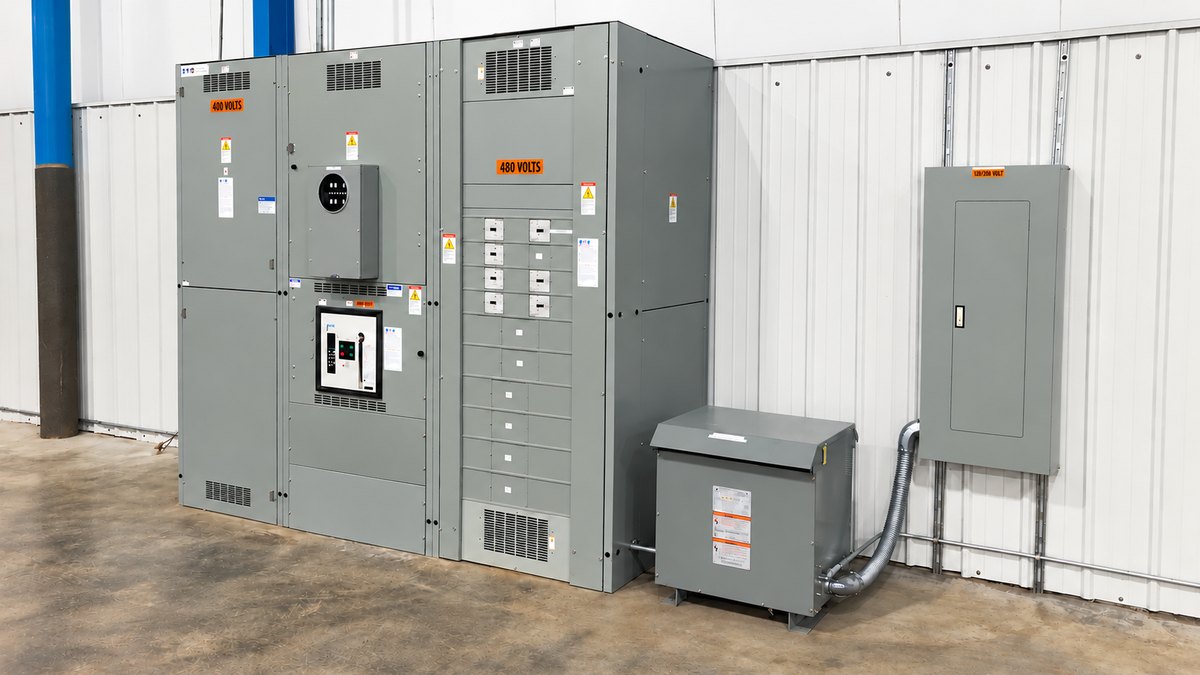
The incoming electrical service supplies the building. Feeders, transformers, panels, and branch circuits distribute that power to specific areas and equipment. A new circuit or downstream distribution change may address a need without replacing the entire service.
Other projects require a larger service, a different supply arrangement, or substantial replacement of existing equipment. The right scope depends on the assessment—not simply whether the panel has spare spaces.
3. Gather records that make the assessment useful.
Share existing electrical drawings, panel schedules, records of earlier work, and utility information available to the building owner. Demand history can help describe how the facility has been operating, but it must be considered alongside planned loads and field conditions.
Let us know about recurring trips, unreliable equipment, or maintenance concerns. Those conditions deserve investigation; increasing service size is not automatically the cure. Photograph only accessible equipment exteriors and labels, leaving covers in place.
4. Bring the utility and property owner into the plan early.
Where utility service changes are involved, the available supply, metering arrangement, transformer location, and service route need coordination. Existing tenant arrangements and landlord approvals can also affect the work.
Ask which tasks belong to the contractor, utility, owner, and other trades. Equipment procurement, utility work, permits, and inspection steps should be considered before a shutdown date is promised.
5. Plan the interruption as carefully as the installation.
Identify what must remain operational: refrigeration, production, computers, security, occupied tenant spaces, and other essential equipment. Provide the facility’s working hours and any shutdown windows.
Discuss whether work can be staged and whether temporary power is practical for specific loads. Temporary power is its own scope to plan. Coordinate safe shutdown and restart responsibilities with the people operating the facility.
6. Compare the complete scope.
An estimate may include service equipment, distribution changes, trenching, concrete restoration, grounding, utility coordination, and after-hours work. Compare what is included and what remains by others—not just the switchboard or panel price.
Request a clear explanation of the recommended approach and the assumptions behind it. A site-specific evaluation should guide the investment; the size of another property’s service is not a sizing rule for yours.
What to send LH Block
- New equipment specifications and planned future additions.
- Existing electrical drawings and panel schedules, if available.
- Available utility usage and demand information.
- Photos of accessible equipment exteriors and the proposed work area.
- Landlord or property-manager contact and approval requirements.
- Operating hours, critical loads, and possible shutdown windows.
Send what you have. We can help identify what still needs review.
Real projects. Practical experience.
Eco Plastics · Rockford
A new industrial service coordinated with underground utility pathways, transformer-pad work, and building distribution.
Explore Eco Plastics · Rockford ↗The Overlook at Oak Brook
Tenant metering and electrical distribution planned around a multi-building commercial development.
Explore The Overlook at Oak Brook ↗Naperville EV Charging Station
Level 2 and DC fast charging supported by a new electrical service and site infrastructure.
Explore Naperville EV Charging Station ↗Planning for more electrical capacity?
Send us the equipment plans, building information, and timing you have. We can discuss what needs to be evaluated next.